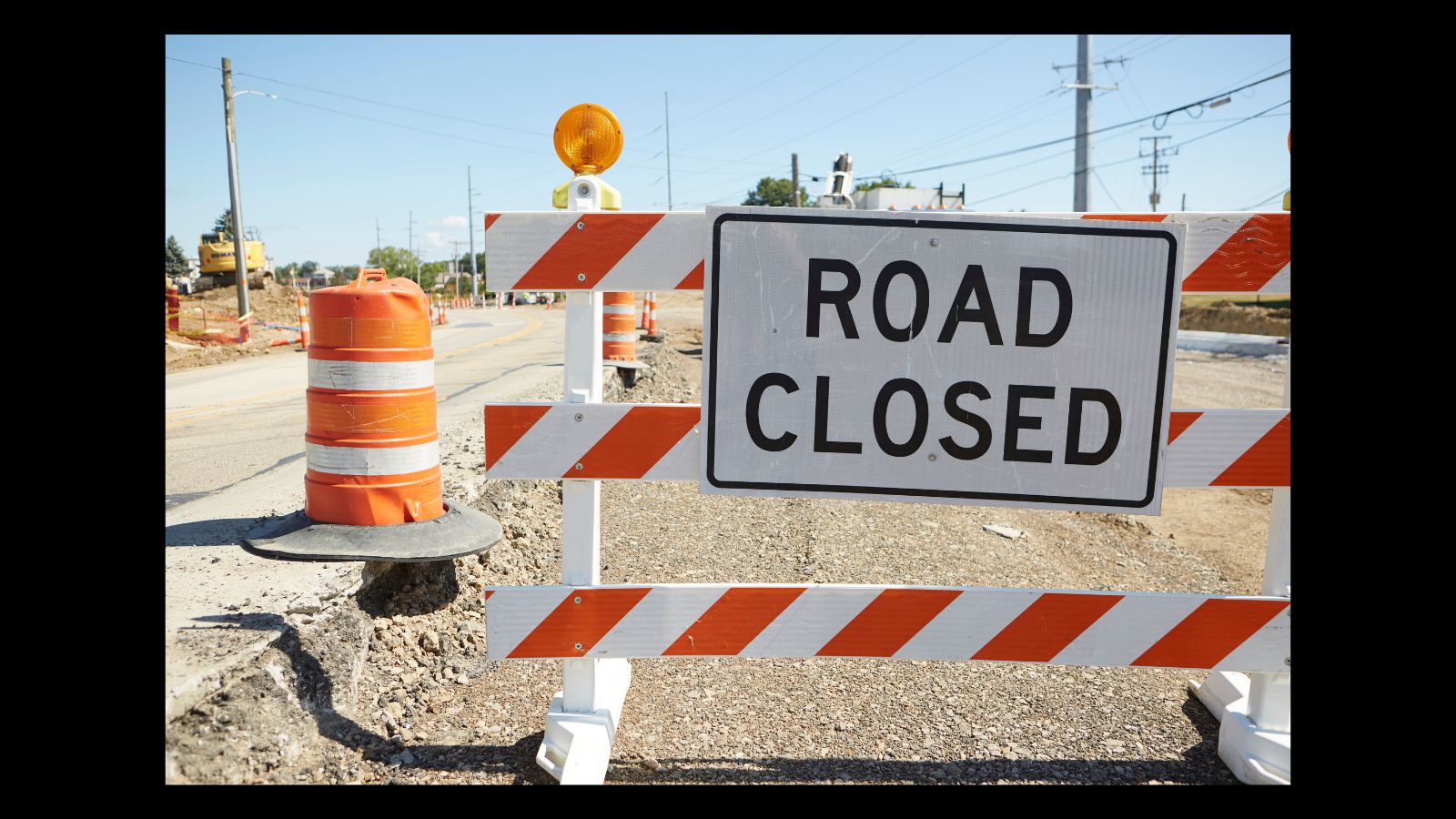
Taking shortcuts can sometimes be hazardous to your health — physically AND mentally. Ignoring signs like this to “get there faster” is usually a mistake.
Early this year, I had to drive out of town to see one of my doctors in person. Prior to that, my visits with her had been on Zoom. (That, of course, started when COVID hit.)
Even though this doctor COULD have started seeing me in person before this, she always gave the option for Zoom appointments. And because of how far I knew I’d have to drive, I stuck with online visits for the next few years.
Dr. Williams USED to meet with patients once a week in town here, but post-COVID, she chose to stick to her home base – in a town about an hour’s drive west of where I live.
Getting there was simple – mostly freeway driving. But coming come, I decided to avoid rush hour traffic by taking some back roads.
THAT was a mistake! However, one good thing I got from that experience was coming up with a couple of new ideas for newsletter topics. This month’s topic – SHORTCUTS – made me think of several ways that could apply to running a business … and really, life in general.
(The other topic that popped into my head during that trip is one I’ll write about in a future issue.)
‘Taking the Scenic Route’ Isn’t Always Fun
The old saying about “taking the scenic route” is one that most of us are probably very familiar with. And it’s one I usually don’t think about much. But if you’ve ever tried taking a route you THOUGHT would save you time — but instead, ended up getting you lost (for a while, anyway) — you know how irritating that saying can be.
Taking shortcuts in other parts of your life can be just as frustrating. And, in some ways, dangerous. That’s because when a shortcut doesn’t end up taking you where you wanted to go (whether a physical location or a goal in your life or business), it can be tempting to just throw up your hands and give up on the whole thing.
The danger may not be life-threatening, but if your frustration causes you to stop trying to reach your goal or destination because you don’t feel like backtracking and starting over, you may lose out on what could have been a very rewarding experience.
Listed below are 3 negative outcomes that can come from constantly taking shortcuts, followed by a list of 3 tips to help you move away from taking shortcuts.
3 Negative Results
DAMAGED REPUTATION
If the work you produce (whether on the job, as a volunteer, or even around the house) is substandard because of the shortcuts you take in your routines or tasks, others will soon realize they can’t depend on you “to get the job done” correctly.
INCREASED STRESS
Trying to make things easier on yourself by not bothering to put things back in their “proper place” can become a real problem … for you AND others around you.
I used to work with a woman who was always losing her keys in her house (which REALLY frustrated her husband). She said she didn’t have time to walk to the spot where they were supposed to go, so she just laid them down wherever she happened to be.
(This is just one way shortcuts can lead to stress.)
DECREASE IN PHYSICAL and MENTAL HEALTH
Getting away from a regular exercise routine (in an effort to save time) doesn’t seem so bad at first, but when skipped days turn into months, and months turn into years, the shortcuts you started out with can turn into permanent detours that short-circuit your life in many ways … such as a decline in mobility and/or cognitive function.
3 Tips for Avoiding Shortcuts
PLAN AHEAD
One great way to avoid the stress that comes from taking shortcuts when preparing for long trips (or major projects) is to make a list. Or SEVERAL lists. Lists that are saved digitally can be printed multiple times and adapted to fit whatever trip or project is coming up next.
Checking out alternate routes on a map is something I’ve learned to do when I know I’m going to be making a trip more than once … and want to make sure an alternate route I’m considering really WILL get me to my destination!
BE WILLING TO FOLLOW THROUGH
When the task at hand is challenging, it can be tempting to skip the last step or two of a procedure you know you should follow. (As in sending “thank-you” letters to clients or cleaning up the kitchen after preparing a large meal.)
Several years ago, my husband and I decided to repaint the living room, hallways, and ceiling in our house. The project was more challenging than we thought it would be … especially since we were the ones doing all the work (prepping, painting, and clean-up).
The end result was good, but I’m pretty sure that was partly due to us “following through.” (The second coat of paint was something my husband REALLY wanted to skip, but after the first coat had dried, he agreed to follow through with that.)
CONSIDER THE COST (& BENEFITS)
If you’re finding it hard to motivate yourself to take the extra step of planning ahead, visualizing what you’d like the end result to be can provide the motivation you need.
If your goal is to succeed with a new blog you’ve started, picture what it would look like for you to be writing posts on a daily basis. If your goal is to finish the book you’ve been SAYING you want to write someday, visualize that book as being complete one year from now.
Or maybe your dream is to travel to a “bucket list” destination.
Visualize yourself being able to afford that within the next couple of years.
Ignore the temptation to put off preparing for that and begin saving, little by little.
Looking at that goal as a “long game” that won’t benefit from taking shortcuts will help you stay focused.
* * * * * *
There are no shortcuts to any place worth going.
~ Beverly Sills (American opera soprano)