

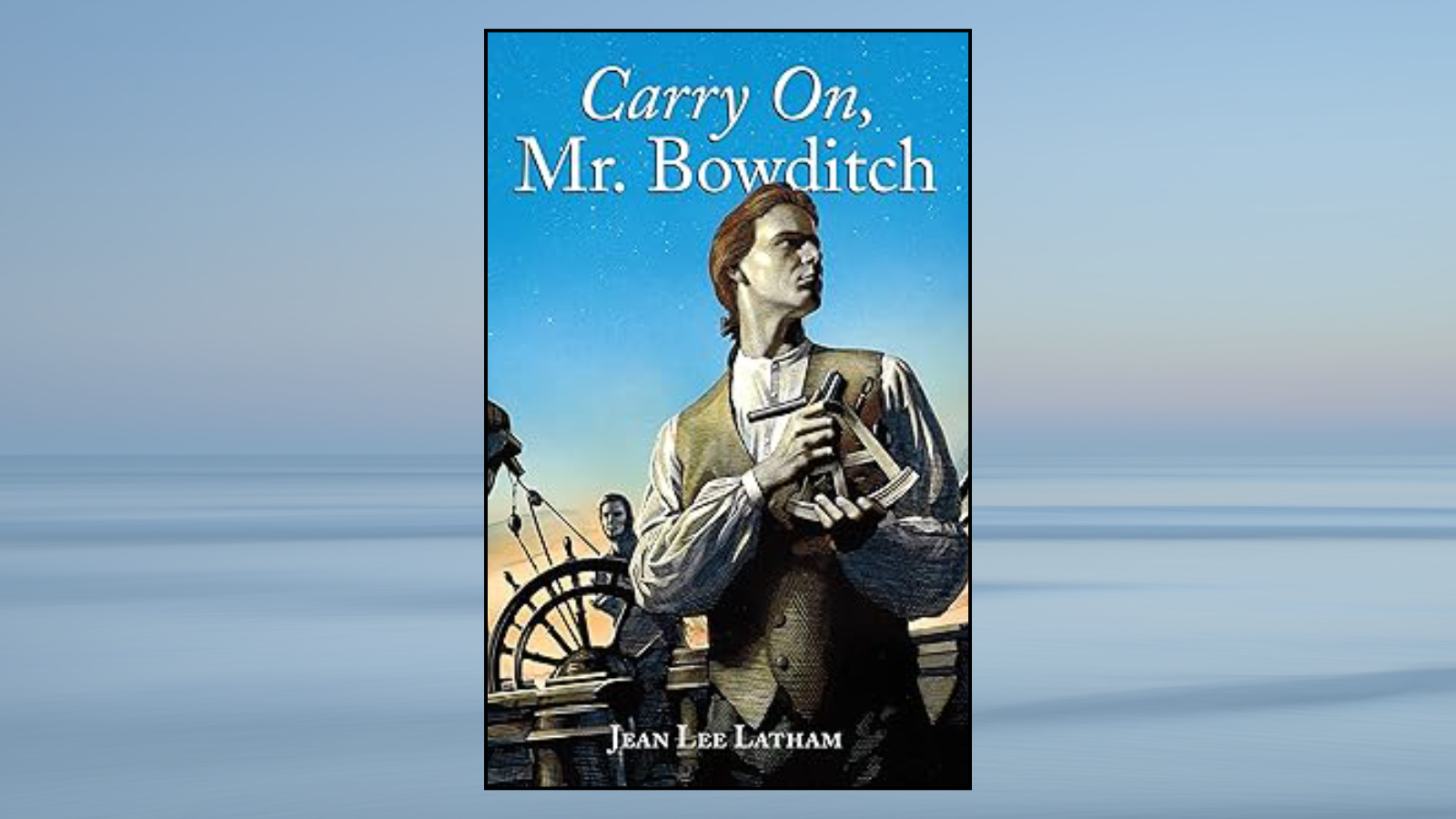
My son (who didn’t enjoy reading) LOVED this book. He was 10 at the time.
This book, Carry On, Mr. Bowditch, played an important part in my son’s life. There was nothing in the title that prepared me for that, since I thought it was just another “history” book that the homeschool co-op I was part of had on display.
The theme for the month was the American Revolution, so all of the books being offered to the kids related to that period of history.
My son was 10 at the time and, even though he was a good reader, reading was definitely NOT his favorite thing to do. He always preferred riding his bike or playing basketball with friends in the neighborhood.
But because some of the other kids in his homeschool group were reading books, he decided to start reading this one. It didn’t take him long to finish it, but once he was done, he wanted to read the entire book again … this time, with me reading aloud to him.
I was glad he did because — other than giving me a chance to have a little more bonding time with him — it gave me a chance to hear Nathaniel Bowditch’s story for myself.
I asked Ben what it was he liked about it so much, and he said it was exciting. (The book had a lot of dialogue in it, but the things the main character lived through — all based on fact — had a lot to do with grabbing and keeping his attention.)
After I finished reading the book to Ben, I did some research on the main character: Nathaniel (Nat) Bowditch.
He worked as an indentured servant for a chandler (a merchant who supplies goods and equipment for ships and boats) for 9 years, from the age of 12 until he turned 21. While there, he worked as a bookkeeper and taught himself calculus, astronomy, French, and Latin.
After finding thousands of errors in the nautical guide that was being used by sailors at the time, he eventually wrote The New American Practical Navigator, which was first published in 1802.
Two things about this impressed me:
(1) Bowditch made sure all 12 members of the crew on the next ship he sailed on (including the cook) learned how to correctly plot the position of the ship … using mathematical calculations instead of what they could see in the sky.
(2) The new method of navigation he created DRAMATICALLY changed the way maritime navigation was done. It’s been said that his work no doubt saved hundreds of sailors’ lives since they never again had to rely on clear weather to help them figure out where they were going! (Before Bowditch’s book came out, navigating at sea relied heavily on being able to see the stars.)
Bowditch continued revising the book until his death in 1838. The book is used in ship navigation to this day.
Published in 1955, this historical / biographical book was written by Jean Lee Latham, who won the Newbery Medal for the book in 1956.
If you have a child or grandchild (or another special young person in your life), I encourage you to get a copy of this book to share with them. But even though this has been marketed as a children’s book, adults enjoy it, too!