
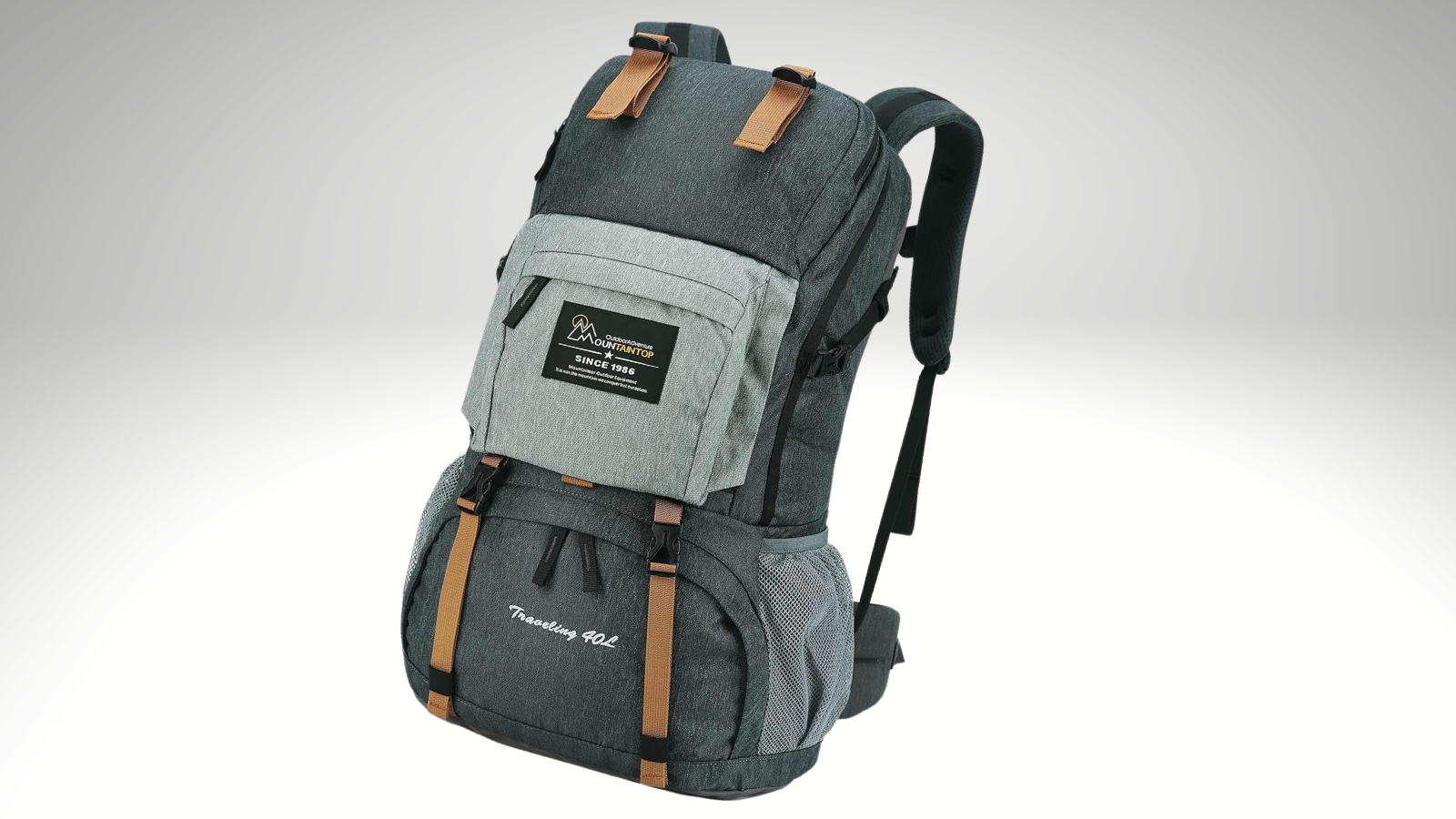
Most backpacks now come with internal frames — invisible from the outside. But the support is still there. The same goes for support systems in different parts of your life. YOU know they’re there, even if others can’t see them.
The 7 things I’ve listed in this issue of my newsletter are lessons I learned while backpacking in my 20’s, but each of them also relates to other types of life experiences … making them relevant (and helpful) to everyone — including non-hikers!
* * * * *
Anyone who has ever gone backpacking will tell you that one of THE most important things you need before taking even one step on a trail is a backpack that sits on a good frame.
Luckily, my first backpacking trip (just two weeks after graduating from college) turned out to be one of the best experiences I’ve ever had. The backpack I used was borrowed, but it sat on a solid frame. When I slipped the straps over my shoulders, I was surprised by how light the load felt.
A backpack frame shifts the weight from your shoulders to your hips, protecting you from injury and making it easy to walk for miles, if necessary.
That was the first of two backpack trips I took that summer, and both times, my memories were of the things I saw and experienced … not on the heavy load I was carrying!
FIRST LESSON
Make sure you have good support.
That support can be PHYSICAL (as with backpacks and walking shoes), EMOTIONAL (as in friends you can trust), or PROFESSIONAL (as in fellow entrepreneurs you network with on a regular basis — whether online or in person).
Listed below are 6 more “lessons” I learned while backpacking — all of which can be applied to pretty much any part of your life … whether business or personal.
Pace Yourself
We were only about halfway to our destination on the backpack trip I mentioned above. The elevation wasn’t too high, which was good, but even before we reached Deer Creek (where we’d be setting up camp), I was learning how to pace myself. Without realizing it, the way I was walking had changed, and the hike no longer seemed difficult.
SECOND LESSON
No matter what stage of life you may be in, listen to what your body needs and adjust accordingly.
If things are getting too hectic, slow down and take a break. If the task you’re working on gets boring or seems overly tedious, look for ways to make it more fun. In other words, pace yourself.
Keep It Simple
Experienced backpackers will warn you: “Don’t carry more than you need.” Even if your backpack sits on a good frame and you feel like you can handle a little extra weight, after an hour or two of walking, you may be sorry you didn’t leave that extra can of beans or your favorite pair of jeans behind.
THIRD LESSON
Pack light.
This holds true no matter what type of trip you’re taking. But it can also relate to your living space, whether in your office or your home. De-cluttering makes it easier to focus on the tasks you’re working on.
Relax!
After laying out my sleeping bag (no tents on this trip), I had plenty of time to “waste” before dinner. It was a hot day, so I wanted to be in the water as much as possible. I waded to a large rock and made myself comfortable. Sitting there for over an hour, with no final exams to study for or textbooks to read, felt strange. But in the end, deeply refreshing.
FOURTH LESSON
Learn how to truly relax.
This is more challenging than you might expect — especially if you’ve just finished a major project or are getting ready to take on a NEW one.
Enjoy the Food
… even when the food you’re eating is something you would never have thought of trying. My experience with this at Deer Creek was eating freshly caught rainbow trout for breakfast (which had been stored overnight in the cold water of the creek near our campsite).
Ignoring the eyes that seemed to be staring at me while I ate was a little hard to do, but I could NOT BELIEVE how good that fish tasted! Other treats on that trip were the fresh Bing cherries and strips of green bell peppers that our leader, Wes Dempsey, had packed. (They came straight from his garden.)
FIFTH LESSON
Look for opportunities to try something new.
Not just food, either. Experiencing new cultures while traveling overseas is a great way to do this.
Choose Good Leaders
Wes Dempsey, a biology professor at the college I had just graduated from (California State University, Chico), was very involved with the local Sierra Club chapter. He was also an experienced botanist, which meant he usually knew the name of every plant we encountered on our hikes.
He was the leader of my first backpack trip and knew his way around lots of trails in Butte County.
SIXTH LESSON
Learn how to spot good leaders.
Whether you’re signing up for a hike, taking a course, or looking for a good business coach, do your homework before committing yourself to whatever it is you’re signing up for.
Luckily, it’s easy to do background checks and see reviews of just about anyone online now, thanks to Google and Yelp.
Enjoy the Experience!
I began writing press releases for local hikes and Sierra Club trips about a year before my first backpack trip. But after going on that first trip (and a few others that summer), I realized I had been missing out on the best part – actually LIVING the experiences I’d only been writing about before!
SEVENTH LESSON
Do you have a bucket list?
If so, take time to go through it, mark the items you’re interested in doing, then make plans to actually DO THEM!