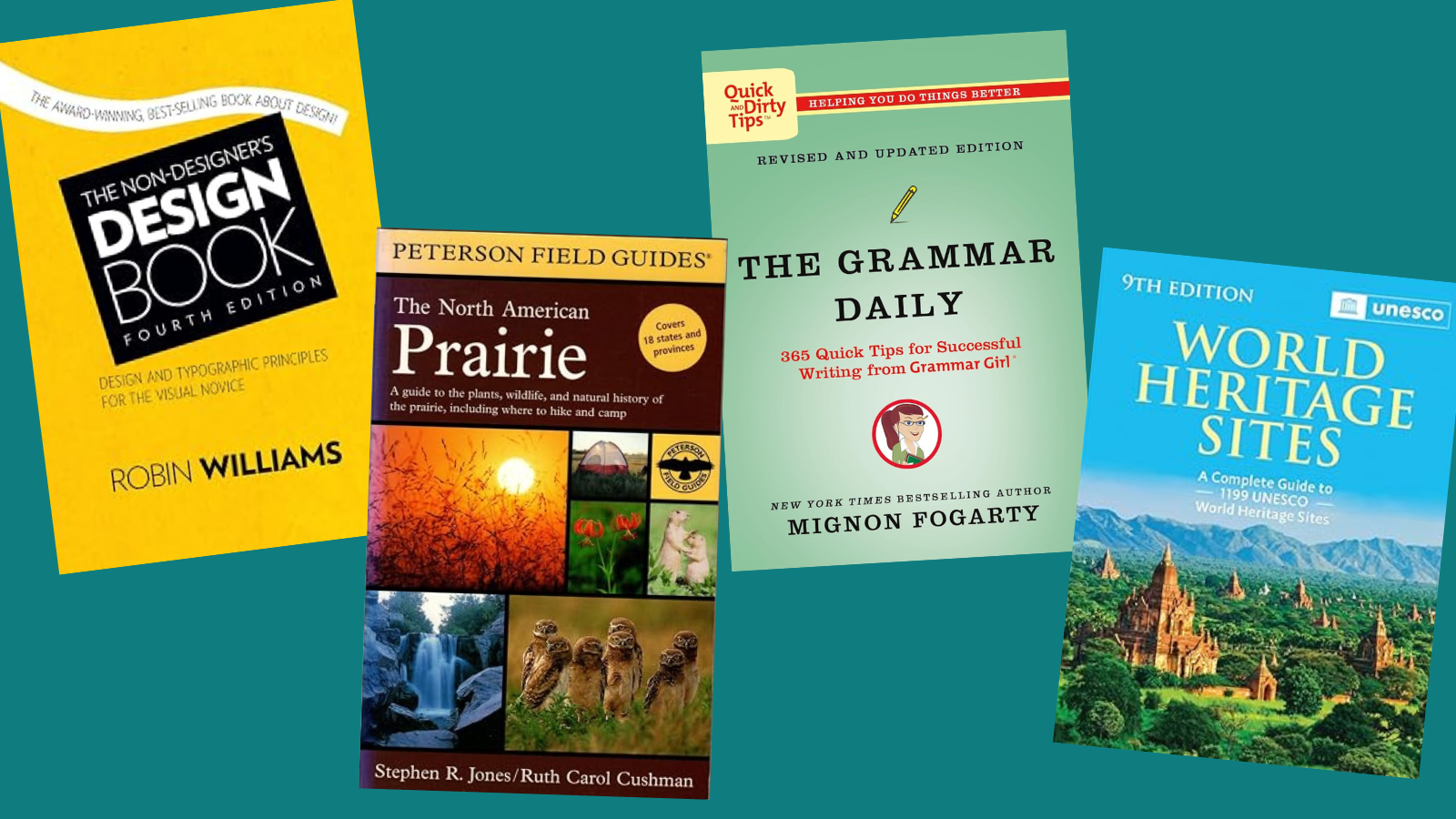
ALWAYS check to make sure your sources are reliable. These are just some examples of ones you can trust.
In this article, you’ll find a list of 5 different categories of sources that have proven to be VERY reliable for years … and, in some cases, decades.
Each category relates to a part of our lives that, even if we’re not seeking that information now, it’s likely we WILL need (or want) to do so at some point in the future.
TRAVEL
The first category is one I became familiar with during my 8+ years as an Assistant Editor at International Travel News. And since my years there taught me how passionate so many people are about visiting different countries and immersing themselves in the culture of those places, I know that finding good sources to support that passion is important.
All 6 of the travel-related companies I’ve listed here have been around since long before the internet arrived, so it’s easy to find print versions (books) of these guides.
World Heritage Sites: A Complete Guide to 878 UNESCO World Heritage Sites … This book has been updated several times since the 2009 edition I own. The latest update was in July 2025, when 26 new locations were added. There are now 1,248 sites, located in 170 countries around the world. (The 2024 edition is the one shown in the image above, but the list has been around since 1978.)
Color photos and maps fill the book. Each site is identified in one of 3 ways: Red (Cultural), Green (Natural), and Blue (Mixed).
This company was officially founded in 1973 by Tony and Maureen Wheeler. After traveling from London to Sydney, Australia, they self-published their first book, Across Asia on the Cheap. (Although Lonely Planet started out just publishing tour guides, they now offer customized travel plans.)
Their website provides a TON of information on any travel-related questions you may have (destinations, hotels, cruises, and more). They also have a way to search for guidebooks tailored to your desination. The founder was Hungarian Eugene Fodor, who published 1936 … on the Continent. After a brief break due to World War II, the company started up again in Paris in 1949.
Although their website isn’t as extensive as Fodor’s, they still offer a wide range of information … including Travel Ideas, Top Destinations, and a Bookstore where they list all of their guidebooks. Their “Most Popular Books” include guides for Ireland, Italy, France, London, and the Maine Coast. (Arthur Frommer published the company’s first guide in 1957.)
According to well-known travel writer Rick Steves, Fodor’s is “encyclopedic and upscale, whereas Frommer’s leans toward budget-conscious, older travelers.”
This company started out offering travel guides in 1982, when founder Mark Ellingham published the company’s first guide: The Rough Guide to Greece. Their honest and practical approach to travel earned them a reputation that helped them build a loyal following.
This travel company has been around longer than any of the others on this list … since 1918! Rick Steves describes Blue Guides as being the “gold standard” for scholarly travelers who want a deep dive into the cultural context of what they’re seeing.
GRAMMAR
The Grammar Daily: 365 Quick Tips for Successful Writing from Grammar Girl (Quick & Dirty Tips) was first published in 2009 (as The Grammar Devotional). This is a GREAT source of information for anyone who writes for either the web or print. (The second edition was published just a few years ago … in 2023.)
Mignon Fogarty’s book contains a year’s worth of lessons on language and is filled with short writing tips, quizzes, puzzles, and memory tricks. (She’s also now a successful podcaster.)
Grammarly is another good resource for grammar, spelling, and punctuation.
STYLE
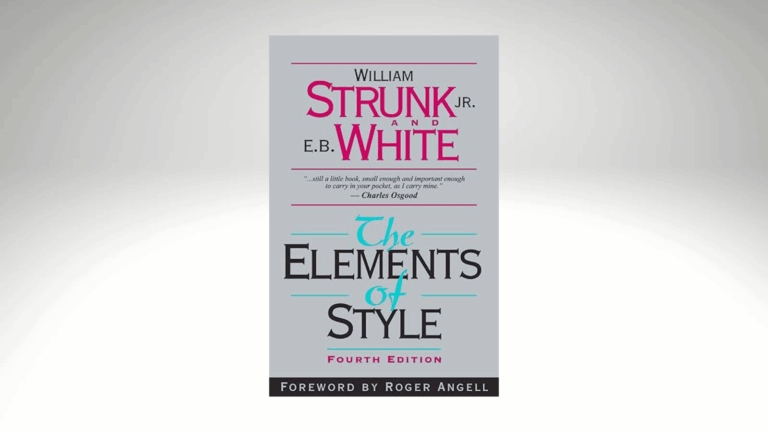
Two stylebooks stand out as THE guides for publishers. The AP Stylebook is the “go-to” authority in virtually every newspaper and magazine office … and the one I’m most familiar with. The Chicago Manual of Style (18th Edition) is more common among book publishers.
But a stylebook that’s less well-known is The Yahoo! Style Guide. Published in 2010, the information in this “Ultimate Sourcebook for Writing, Editing, and Creating Content for the Digital World” is still relevant today.
DESIGN
Since many of us have to deal with SOME type of design in our work these days, I’m sharing information about a book that can help bridge the gap between non-designers and full-fledged designers or content creators who are used to working with a variety of design tools (including Canva, Adobe Photoshop, and AI image-generating programs).
The Non-Designer’s Design Book (by author/graphic designer Robin Williams) is now in its 4th edition, published in November 2014. Through the use of four very simple principles, Williams teaches how to transform projects like newsletters, brochures, and flyers into impressive “works of art.”
(The book has earned a 4.6-star rating out of nearly 1,700 reviews on Amazon — many of which were written within the last few months.)
Here are the principles:
🔴 How to design with color. . . . 🔵 How to design with type. . . .
🟣 How to combine typefaces for maximum effect. . . .
🟢 How to see and think like a professional designer.
NATURE
The fifth category I’m including is such an integral part of our lives, we usually take it for granted. The publishers that produced the 3 guides I mention here are well-known for their nature guides. All of them contain color photos and/or illustrations.
Peterson Field Guides are the ones I’m most familiar with. What sets them apart from other guidebooks is the way they identify “field marks” with arrows — things that would help someone identify birds, mammals, reptiles, plants … whatever the focus of that particular guide may be.
Other popular (and trustworthy) nature guide publishers are DK (Dorling Kindersley) and Sibley Guides. Popular guides published by London-based DK include the Pocket Guides of North America and the Eyewitness Travel series. (Founded in 1974, DK is now an imprint of Penguin Random House.)
Ornithologist David Sibley writes and illustrates all of the Sibley Guides. His first guidebook was published in October 2000.
OTHER SOURCES
Of course, there are many OTHER good sources out there. If you know someone who happens to be an expert in his or her field, he or she may be willing to serve as a SME (subject matter expert) for you.
And of course, there’s always the library. And your phone — which is probably how you access info you used to open a dictionary or encyclopedia to find.
The one common denominator between all of these sources is this:
TRUST
Connecting with a company or organization — and using their services
or products year after year — is what turns a simple referral
or recommendation into a life-long relationship.
Nothing beats the reliability of sources like that.